
GOOD QUESTIONS.
CLEAR ANSWERS.
From your first logo to your next team order. Practical advice on embroidered workwear, DTF printing, artwork, sizing, delivery and looking after your clothing.
WHAT WOULD YOU LIKE TO KNOW?
Choose a topic, then open a question for the full answer.
FROM FIRST IDEA TO A CLEAR QUOTE.
Planning a new uniform, a small top-up or a whole-team refresh? Start with the details that make your quotation useful.
Back to topicsWhat do you need to give me a workwear quote?
Send your logo, the garment types or catalogue product codes, quantities, colours and a size breakdown. Tell us where you want each logo, whether you need staff names or a back design, your required date and your delivery postcode or collection preference.
Not sure which garments to choose? Tell us what your team does, the working conditions and your budget. We can discuss suitable options before preparing your quotation.
How do I order printed or embroidered workwear?
Browse the full clothing catalogue or send us your requirements through our quote form. We will discuss garments, branding, availability and timing, then confirm the quotation and order details.
Check product codes, sizes, colours, logo positions and any personalised names carefully. A quote enquiry starts the discussion; it does not automatically place a production order.
Is there a minimum order, and can I order a small quantity?
Tell us what you need, even if it is a small team order or a top-up for a new starter. We confirm any quantity requirements for your particular garments and design when quoting.
Setup and artwork preparation affect the cost of smaller orders. Ordering several garments with the same branding can spread those costs, but there is no single quantity rule that applies to every product or decoration method.
Can I mix garment types, sizes and colours?
Include the full breakdown in your enquiry: for example, navy polos in several sizes, black hoodies and a few softshell jackets with the same company logo. We can discuss a coordinated uniform rather than making everyone wear the same garment.
Different fabrics or colours may need different thread colours, logo sizes or print preparations. We will check the combination and price each part of your order.
What affects the price of branded workwear?
Your quotation depends on the garments, quantity, decoration method, design size and number of logo positions. Embroidery also depends on stitch count and the work needed to prepare the logo. Extra staff names, artwork work, digitising and delivery can affect the total.
Send the complete job together so we can price it accurately. A plain garment price in a catalogue should not be assumed to include printing, embroidery or delivery.
Do your workwear bundles include a logo?
Our Trade, Classic and Pro workwear bundles include logo setup and left-chest printing or embroidery. You can also enquire about a bespoke garment mix for your team.
The displayed bundle prices are starting prices plus VAT and are subject to availability. Larger back designs, extra positions and individual names should be included in your enquiry so the final quotation reflects everything you need.
How can I pay, and are prices inclusive of VAT?
Our published payment options include debit or credit card, cash and bank transfer. Follow the payment details and terms supplied with your invoice.
Check the VAT wording beside each advertised price. Workwear bundle starting prices are shown plus VAT; some product pages show a different VAT basis. Your quotation or invoice confirms the applicable VAT and final total, including any agreed artwork, setup and delivery charges.
A SMART FINISH. DOWN TO THE STITCH.
Understand logo setup, fine detail and the practical choices behind embroidered polos, hoodies, jackets and headwear.
Back to topicsWhat is embroidery, and which garments suit it?
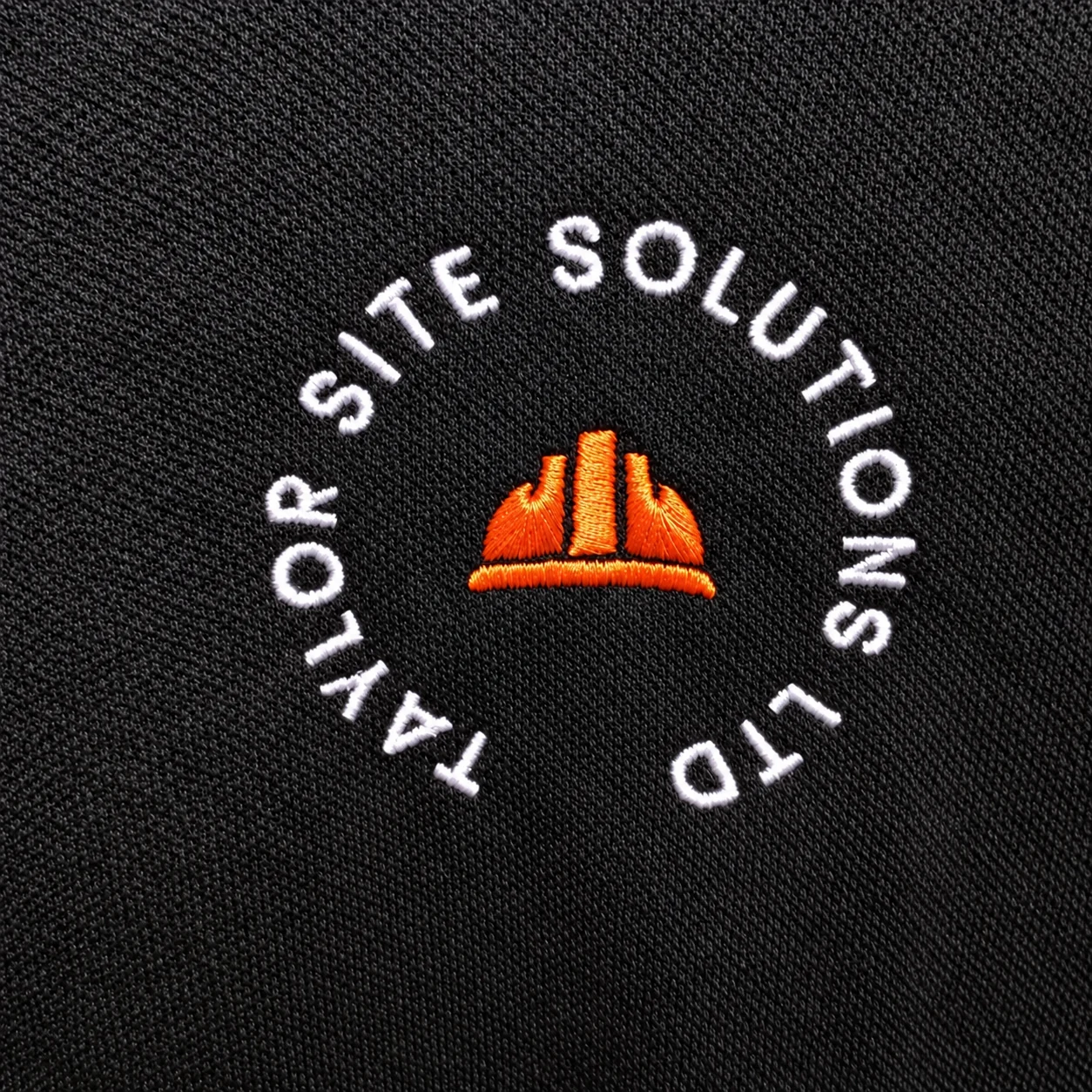
Embroidery stitches your logo or lettering into suitable fabric using coloured thread. The result has a textured finish that is popular for company logos on polo shirts, sweatshirts, hoodies, fleeces, jackets and suitable headwear.
The fabric and garment construction matter as much as the design. Send the product code and logo so we can check whether embroidery is a sensible choice. See our logo embroidery page for examples.
What is embroidery digitising, and why is it needed?
Digitising translates your logo into instructions for an embroidery machine: how the stitches are formed, their direction, sequence, density and thread changes. A PNG, JPEG or PDF supplies the artwork, but is not itself a ready-to-sew file.
The design needs preparing for the intended size and fabric. This helps lettering stay readable and shapes reproduce cleanly when an image becomes thread.
How much does embroidery digitising cost?
The standard one-time embroidery digitising fee is £25.00 + VAT. Setup is free where your chosen workwear bundle explicitly includes logo setup; check the inclusions stated for that bundle.
We confirm the setup that applies in your quotation. Once prepared, the same unchanged logo is kept on file for repeat orders; changes to the design or a substantially different finished size may need further preparation.
Can you embroider small lettering, gradients or photographs?
Thread has a physical thickness, so very small text and fine lines may need enlarging or simplifying. Dense details can also behave differently on a smooth shirt, a textured polo and a fleece.
Photographs, subtle shading and colour gradients usually suit printing better. Send your artwork at the size you have in mind and we will discuss a practical way to keep your logo recognisable.
Can you match my company colours in embroidery?
Send your brand guidelines, Pantone references or a clear example of your established logo colours. We can discuss a close match from available thread shades.
Thread, printed ink and a phone screen reflect colour differently, so an exact match across every material cannot be assumed. If a particular brand colour is critical, flag it before approving the order.
Can I have a chest logo, sleeve logo and staff name?
Yes, tell us every position and any individual names you want. Left-chest branding is a popular choice, with other positions available where the garment allows access and enough suitable space.
Seams, pockets, zips and linings can limit the layout. Send a typed name list with the correct spelling and a size allocation for each person. Each extra position or individual name is considered in the quote.
Can you embroider garments I already own?
We offer an embroidery-only service on suitable customer-supplied clothing. Contact us with the brand or product code, fabric details, quantities, logo and preferred positions before buying, posting or bringing garments in.
Acceptance depends on construction, access and suitability for embroidery. We will explain the proposed approach and any applicable conditions first, especially for expensive, waterproof or specialist clothing.
FULL COLOUR. BIG PERSONALITY.
Make sense of DTF, large back designs and the difference between a printed finish and stitched branding.
Back to topicsWhat is DTF printing?
DTF stands for Direct to Film. Your artwork is printed onto a specialist transfer film using colour and white ink. An adhesive layer is applied and cured, then the design is transferred onto suitable clothing using a heat press.
It is useful for multicolour logos, illustrations, gradients and detailed text. Cotton, polyester and blends can be suitable, but the exact fabric, finish and design still need checking.
Should I choose embroidery or DTF printing for workwear?
Embroidery is often a good fit for compact company logos and a textured finish on polos, fleeces and jackets. DTF printing is useful for colourful artwork, larger back designs and detail that would be difficult to reproduce in small stitches.
Start with your logo, the garment and how it will be worn and washed. We can recommend a suitable method or combination. The quick comparison below is a useful starting point.
Can I combine an embroidered chest logo with a printed back?
Yes, we can discuss combining methods on a suitable garment. A stitched company logo on the chest and a printed business name, phone number or larger design on the back can work well together.
Include both positions, approximate dimensions and all wording in your enquiry. We will check garment suitability and quote the complete layout, including any extra personalisation.
Can DTF print full colour, white ink and detailed designs?
DTF can reproduce multicolour artwork and uses a white ink layer to help colours show on dark garments. It is a useful option for designs with gradients or fine detail, provided the source artwork is good enough.
Very thin lines and tiny lettering still have practical limits. We will assess the intended print size rather than assuming a design that looks clear on a large screen will read equally well on a small chest logo.
Will a large printed design feel different from the fabric?
A transfer sits on the fabric, so you may feel the printed area. A large, solid block of artwork generally covers more fabric and feels different from an open design with separate lettering or shapes.
Think about comfort as well as visibility, particularly on lightweight T-shirts or sportswear. We can discuss the layout and coverage before you settle on the design.
Can you add names, numbers and school leavers designs?
Tell us the names, numbers, positions and garment choices. We can discuss personalised workwear, team clothing and group designs rather than limiting every garment to the same wording.
Our school leavers hoodie page explains DTF printing, the recommended AWDis JH001 adult and JH01J children’s hoodies, and designs with names inside the year numbers. Check the final typed name list and spelling before approving a school or team order.
STITCHED OR PRINTED?
CHOOSE WITH CONFIDENCE.
The best choice depends on your logo, clothing and wash routine. Here is how the two finishes compare.
| Your priority | Logo embroidery | DTF printing |
|---|---|---|
| The finish | Textured stitches that become part of the garment. | A printed transfer applied to the surface with a heat press. |
| Compact company logos | A popular option on polos, fleeces and suitable jackets. | Useful where full colour or finer artwork suits a printed finish. |
| Large back designs | Size and stitch count can make large designs more costly. | Often a practical choice for larger logos, lettering and graphics. |
| Gradients and photographs | Usually need simplifying into stitch-friendly shapes and colours. | Can reproduce shading and multicolour detail from suitable artwork. |
| Garment suitability | Needs suitable fabric, stabilisation and access to the logo area. | Needs fabric and finishes that tolerate the transfer’s heat and adhesive. |
| Care | Follow the garment and embroidery guidance; protect the stitching. | Follow garment and transfer guidance; avoid direct ironing and excessive heat. |
You can also combine a chest embroidery with a back print on suitable clothing. Send your logo and garment choices and we will discuss the combination.
Help me choose my brandingSEND THE BEST FILE. GET A BETTER FINISH.
A little preparation helps avoid fuzzy logos, missing backgrounds and last-minute changes.
Back to topicsWhat file format should I send for my logo?
A genuine vector PDF, SVG, EPS or AI file is useful for logo artwork because its shapes can be resized cleanly. A clear, high-resolution PNG or JPEG can also be assessed. Send the original file if you have it.
Changing a small JPEG’s filename or saving it as a PDF does not restore missing detail. If you are unsure, send the best file available and we will tell you whether it is suitable or needs artwork work.
Does my artwork need to be 300 dpi?
For raster artwork such as photographs or PNG files, aim for around 300 dpi at the intended printed size. The size matters: a small image marked 300 dpi may still have too few pixels for a large back print.
Vector artwork is not limited in the same way. Send the file and the approximate logo dimensions, rather than changing a resolution setting and assuming the image has become sharper.
How should I send artwork without losing quality?
Email your original artwork as an attachment to sales@sandycroft-workwear.co.uk. If the file is too large for email, contact us to agree a file-transfer route such as WeTransfer.
If sending through a messaging app, send the artwork as a file or document where possible. A screenshot or compressed photo may lose detail. Keep an unedited original available so we can work from the clearest version.
Do I need a transparent background for a printed logo?
If you want only the logo printed, a transparent PNG or suitable vector artwork helps distinguish the design from its background. A white rectangle in the file can become part of the printed design unless it is removed during preparation.
Tell us which parts should be transparent and which should print white, especially for dark clothing. Do not remove intended white lettering or logo details when preparing the file.
Can you help if my logo is poor quality or I only have an idea?
Send what you have and describe the finished result you want. We can assess the artwork and discuss design or redraw work where needed, including simplifying a logo for embroidery.
Artwork work may carry an additional charge depending on complexity and time. We will discuss that with you and provide proofs for review as part of agreeing the finished design.
What should I check on an artwork proof?
Check the spelling, staff names, phone numbers, website address, colours, background, design size and position. Compare the proof with the actual wording you want, rather than only checking the overall appearance.
A screen preview helps confirm the layout; it cannot reproduce the texture of thread or guarantee an exact physical colour match. Raise anything unclear before agreeing the final artwork, particularly when ordering personalised garments for a whole team.
THE RIGHT KIT FOR THE JOB.
Choose clothing for your team’s work, comfort and care routine, then plan the branding around it.
Back to topicsWhich workwear brands and garments can I choose?
Browse our full clothing catalogue and the linked Uneek, PRO RTX and Beeswift workwear and PPE pages. Options include polos, T-shirts, hoodies, sweatshirts, fleeces, outerwear and specialist workwear.
Note the product codes, colours and sizes that interest you. Availability varies by style and colour, so we confirm the products for your order before production.
How do I choose the right sizes for my staff?
Use the size guide for the exact product code. A medium in one brand or fit may measure differently from a medium in another. Check whether the chart gives body measurements or actual garment measurements before comparing it.
Ask staff to check their fit preferences and allow for layers where appropriate. For a larger uniform rollout, enquire about checking an undecorated sample before committing to the complete size breakdown.
Can I check a sample before ordering a full team uniform?
Ask us about the style and size you want to assess. We can discuss whether a sample or undecorated garment can be arranged, with availability, cost and any return arrangements confirmed beforehand.
A fitting sample helps assess comfort, sleeve length and room for layers. It is separate from an artwork proof or a physical stitched or printed sample; tell us which kind of check you need.
Do catalogue prices and stock include personalisation?
The catalogue helps you compare clothing, colours, sizes and specifications. Do not assume a displayed garment price includes your particular logo, setup, extra positions or delivery.
Stock and supplier prices can change while you are planning an order. Send the product codes and quantity breakdown so we can confirm availability and a final personalised quotation.
Can you brand hi-vis clothing without covering reflective tape?
We can discuss branding on suitable hi-vis garments. The logo size and position must be assessed against the garment manufacturer’s decoration guidance, including the fluorescent area and reflective bands.
A large design can reduce the visible background area, and the available space can vary by garment size. Tell us the visibility class and site requirements you need; do not assume that any logo placement preserves the garment’s certification.
Can waterproof or specialist protective workwear be decorated?
Some garments need particular care: stitching punctures the fabric, while heat can affect coatings or specialist materials. The right approach depends on the product and the manufacturer’s decoration instructions.
Send the exact code and any required protective specification before ordering. Flame-resistant, antistatic or other specialist PPE needs a suitable decoration system. An ordinary print or thread should not be assumed to preserve protective performance.
Can I order uniforms for hospitality, schools, clubs and charities?
Yes, tell us who the clothing is for and how it will be used. We can discuss customer-facing uniforms, practical trade clothing, sports and teamwear, charity event garments and school leavers hoodies.
Useful details include washing requirements, indoor or outdoor use, staff roles, sizes and whether every garment needs the same design. Browse corporate uniforms or sportswear for relevant starting points.
PLAN THE DATE. SORT THE DETAILS.
Get the garments, artwork and delivery arrangements agreed early, especially for events and new starters.
Back to topicsHow long does printed or embroidered workwear take?
Our published typical production guide is 7–10 working days. The achievable date depends on garment availability, order size, artwork preparation and the branding required.
Ask us to confirm the timing for your actual order and supply artwork and size details promptly. Delivery time is additional to production. For an event, tell us the date the clothing must be with you rather than only the dispatch date.
Can you help with an urgent or last-minute order?
Contact us with your deadline, quantity, product choices and logo as early as possible. We will check stock, artwork work and the production schedule before advising what is achievable.
Do not assume an express service is available for every product. If timing is tight, tell us whether a different garment, simpler layout or local collection would suit your plans.
Do you offer UK delivery, and how much does it cost?
Yes, UK delivery can be arranged from our Sandycroft base. Include your full delivery postcode and required date in your enquiry so we can confirm the arrangements and cost for the order.
Parcel size, weight and destination affect delivery. Ask about any destination-specific charges or longer transit times when quoting. See our UK delivery and city pages for the areas we serve.
Can I collect locally or visit Sandycroft Workwear?
Local collection is available from 26 Babbage Road, Engineer Park, Sandycroft, Flintshire, CH5 2QD, near Deeside and Chester. Customer parking is available outside the unit.
Wait until we confirm your order is ready before travelling to collect. Check the contact page or call 01244 638 747 to confirm visiting hours, especially if you are making a special journey.
Can I track delivery or arrange shipping outside the UK?
Once a tracked courier order is dispatched, we send the tracking reference by email so you can follow the delivery. If you need a progress update before dispatch, contact us with your order or invoice reference.
International shipping needs discussing and agreeing when ordering. Availability and cost depend on the destination, parcel size and weight; customs charges may apply.
LOOK AFTER YOUR LOGO.
Follow both the garment label and the decoration guidance. A fabric’s maximum wash temperature is not automatically right for its print.
Back to topicsHow should I wash DTF printed workwear and hoodies?
Follow the care instructions supplied with your order and the garment label, using the more restrictive guidance where they differ. As a general approach, turn printed clothing inside out, use a gentle wash around 30°C where suitable, and avoid bleach or harsh stain treatment directly on the design.
Allow at least 24 hours after application before the first wash, or longer if the supplied transfer guidance requires it. Air drying is a gentle option; avoid high-heat drying and ironing directly on the print.
How should I care for embroidered garments?
Follow the garment’s washing and drying instructions. Turning suitable garments inside out can reduce rubbing against the stitching, and closing zips helps prevent catching on other items.
Avoid a hot iron directly on the embroidery. If ironing is permitted, use the garment’s guidance and protect the stitched area. Do not pull loose threads or cut away backing without checking with us first.
Can printed clothing go in a tumble dryer or be ironed?
Check both the garment label and the decoration instructions. High heat can damage a transfer, so air drying is the cautious choice unless the supplied instructions specifically allow tumble drying.
If ironing is allowed, iron on the reverse at a suitable setting and keep direct heat away from the printed surface. A garment being iron-safe does not mean its printed logo can be ironed directly.
Will embroidery or DTF printing last longer?
Both can give a durable finish when the garment, artwork and application are suitable and the clothing is cared for correctly. Their appearance is different: embroidery is stitched, while DTF adds a printed transfer to the fabric.
There is no single wash-count promise that covers every garment and design. Heat, abrasion, chemicals and the wash routine all matter. Tell us if your team uses frequent hot washing or commercial laundering before choosing the clothing and branding.
What if the print starts lifting or the embroidery looks damaged?
Contact us with your order reference, clear photographs and details of how the garment has been washed and dried. Keep the item so we can assess the issue.
Avoid trying to re-press a lifting print with a household iron or pulling at damaged stitching. Different fabrics and transfers need different treatment, and an attempted repair can make it harder to establish what happened.
KEEP YOUR TEAM LOOKING CONSISTENT.
New starters, replacement garments and order questions are easier to handle with the original details to hand.
Back to topicsCan I reorder the same logo for new staff or replacement garments?
Yes. Send your previous order or invoice reference, the garment codes, colours, sizes and quantities you need. We keep digitised logos on file so the same unchanged embroidery design can be reused without paying the original digitising fee again.
Tell us if anything has changed, including the logo, position or finished size. Garment availability and current prices still need confirming for each repeat order.
Will a repeat order exactly match my previous garments?
Using the same product code, colour and approved logo details is the best starting point. Send the earlier order reference so we can compare the specification.
Manufacturers can change products or discontinue colours, and fabric batches can vary slightly. If a precise match is especially important, tell us before ordering so any substitutions or differences can be discussed.
Can I amend or cancel an order after placing it?
Contact us immediately and confirm the request by email. Our existing published policy asks for amendments or cancellations to be confirmed within one hour of placing the order.
We will check what stage the order has reached and explain what can still be changed. Purchased garments, artwork work or personalisation already under way may affect the available options. Do not assume a change is agreed until we confirm it.
Can I return personalised workwear if I change my mind or choose the wrong size?
Personalised or custom-made garments generally cannot be returned just because you change your mind or selected the wrong size. Check the product-specific size guide, colour, spelling and final order breakdown before agreeing production.
This does not remove applicable statutory rights for goods that are faulty, not as described or incorrectly supplied. Contact us if there is a problem so we can assess it and discuss the appropriate remedy.
What should I do if my order arrives faulty, damaged or incorrect?
Tell us promptly with your order reference, a description of the issue and clear photographs. Our published guidance asks customers to contact us within seven days of receipt where possible, so we can investigate quickly; this request does not limit applicable statutory rights.
Keep the garments and packaging while the issue is assessed. We will discuss the appropriate next step after checking the order details and what has happened.
A FEW DETAILS.
A BETTER QUOTATION.
Copy this checklist into your enquiry and we can get straight to the clothing and branding you need.
- The clothing: garment types or product codes, colours and quantities.
- The fit: a size breakdown for each product.
- The branding: your logo, positions, dimensions and any names.
- The timing: the date the order needs to be with you.
- The destination: delivery postcode or local collection.
LET’S GET YOUR TEAM SORTED.
Talk to Sandycroft Workwear about printing, embroidery and uniforms for your business, school, club or charity. Based near Deeside and Chester, serving Flintshire, North Wales and customers across the UK.